RCM automation pricing based on your workflows and scope
Sarva does not publish a rate card. What an engagement costs depends on the workflows you automate, the systems they run in, the volume they process, and the review arrangements your team requires. A quote is prepared after those factors are confirmed — here is exactly what goes into one.
What influences an RCM automation quote?
The short answer: scope. A quote follows from the workflows, systems, volume, and review model — not a seat count.
What drives the investment
Workflow breadth, the number of distinct systems and connection methods, monthly transaction volume, implementation support, and how much exception review your staff retain. More scope in any of these moves the number.
What does not
Sarva does not price per claim filed by your staff or charge for the manual work automation removes. There is no published per-seat rate to multiply out — the quote reflects the scoped workflows.
Pricing factors
Five factors shape an RCM automation quote. Each is confirmed during discovery before a number is prepared.
Workflow scope
Which workflows are in scope — eligibility verification, claim review and scrubbing, denial management and appeals, accounts receivable follow-up, payment posting — and how many exception paths each one includes.
Systems and connection methods
The practice-management, EHR, clearinghouse, and payer sources involved, and what access and permissions each connection requires. Compatibility is assessed per system during discovery.
Transaction volume
Expected monthly claims, eligibility checks, and remittances the workflows will process, plus how volume is expected to grow.
Implementation requirements
Workflow mapping, testing, pilot measurement, and the rollout support the change needs. A multi-client billing company rollout is scoped differently from a single practice.
Review arrangements
Which decisions your staff approve, how exceptions escalate, and the reporting your team or your clients expect. Review design affects configuration effort and support.
These factors describe how a quote is prepared. They are not a pricing formula, and no rates, discounts, or contract terms are published on this page.
How requirements differ by organization
The same factors weigh differently depending on who runs the revenue cycle.
Physician practices
Usually a small set of workflows with high manual effort — eligibility, front-end claim review, denial follow-up. Scope tends to be narrower and review stays with existing staff.
Specialty groups
Specialty coding rules and payer variations add configuration depth. Volume per workflow is often moderate, but exception handling is more specific.
US medical billing companies
Multiple clients mean multiple systems, payer mixes, and workflow preferences. Scope covers workflow breadth across clients plus access separation and reporting arrangements. See billing-company requirements.
Assessment, pilot, and broader rollout
Engagements usually move through three stages. These are scope stages, not packaged products with fixed prices.
| Consideration | Assessment | Pilot | Broader rollout |
|---|---|---|---|
| Purpose | Identify where automation fits | Prove one workflow on real work | Extend what the pilot verified |
| Systems access | Read-only or described, not required | Scoped access for the pilot workflow | Access per workflow as each rolls out |
| Staff involvement | Interviews and workflow walkthroughs | Reviewers trained on the pilot workflow | Reviewer groups per workflow |
| Measurement | Baseline agreed in writing | Pilot results vs. baseline | Measures tracked per workflow |
| Commitment | None — conversation and scoping | Limited to the pilot scope | Set per the approved scope |
What to have ready for a quote
Operational descriptions are enough for a first quote conversation. Never submit patient information through a marketing form.
Helpful for scoping
- The workflows creating the most repeatable work today
- Practice-management, EHR, clearinghouse, and payer systems involved
- Approximate monthly transaction volume and growth expectations
- Who reviews exceptions today, and in which systems they work
- Any measures you already track: queue age, denial categories, turnaround
- Security, access, and procurement requirements
Not needed — and not requested
Patient names, PHI, claim-level files, or system credentials are never requested through the website or a marketing form. If an engagement later needs sample data for scoping, it is handled under agreed access and security terms after the conversation starts.
Evaluating return: compare a baseline with pilot results
The honest way to evaluate ROI is a before-and-after comparison on your own numbers, with the assumptions written down.
- 1. Agree the baseline before the pilot. Capture current measures for the workflow: staff hours per week, queue age, denial categories, rework rate.
- 2. Run the pilot on real work in a bounded scope. Same measures, same definitions, reviewed at agreed checkpoints.
- 3. Compare and write down the assumptions. Any projected annualized value should state its inputs — volumes, rates, and staff cost assumptions — and be labeled as a projection.
Pricing questions
No. Sarva does not publish a rate card because the scope — workflows covered, systems involved, transaction volume, implementation requirements, and review arrangements — differs for every organization. A quote is prepared after those factors are confirmed.
The latest from Sarva
Practical ideas for better revenue operations, smarter automation, and stronger healthcare teams.
 May 15, 2026
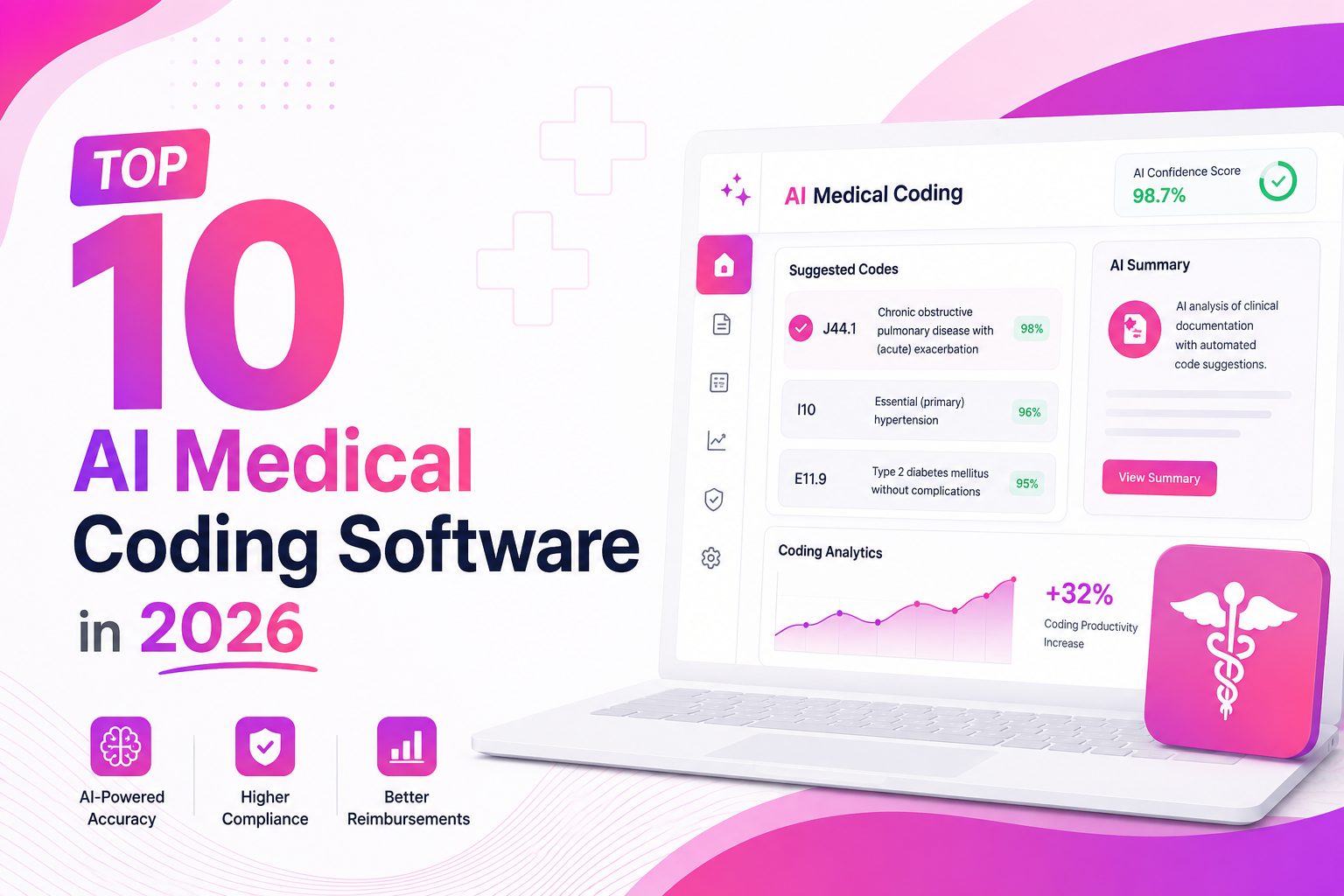
Top 10 AI Medical Coding Software in 2026
A practical comparison of AI-powered medical coding platforms transforming healthcare revenue cycle operations.
 May 8, 2026
How AI Is Eliminating Claim Denials Before They Happen
Discover how predictive AI catches denial-prone patterns before claims are submitted.
Apr 29, 2026Calculating the True ROI of RCM Automation
A practical framework for measuring how much revenue automation can recover for healthcare practices.
Get a quote based on your actual scope
Share the workflows, systems, and review requirements — Sarva prepares a scoped quote, not a generic rate.