EHR-Integrated Payer Workflow Without Disruption
Illustrative Revenue Cycle Automation Scenario. This scenario demonstrates how a healthcare organization could apply revenue-cycle automation. It is not presented as an actual customer result.
The Challenge
A multi-specialty group using athenahealth wanted to add RCM automation but was concerned about workflow disruption. Staff were comfortable with the EHR billing module and resisted adopting a separate tool. Previous RCM technology implementations had failed due to low adoption.
The Approach
Sarva was deployed as an invisible API layer connecting to athenahealth — no separate interface for staff to learn.
Claim scrubbing ran automatically when encounters were finalized — results appeared in the athenahealth worklist.
Denials were auto-routed with context added to the athenahealth denial notes.
Payment posting was written back to athenahealth automatically.
Illustrative Outcomes
Outcomes are illustrative and do not represent actual customer results.
Key Lessons
- Invisible integration — where Sarva writes back to the EHR — drives adoption by eliminating workflow change.
- Staff do not need to learn a new tool; they see results in their existing EHR.
- API-first integration with the EHR preserves it as the system of record.
See how this approach could work for your organization.
Book an RCM Automation DemoRelated Use Case
Related Connectors
Related Articles
Frequently Asked Questions
No. This is an illustrative scenario. The metrics shown are illustrative, not actual customer results.
The latest from Sarva
Practical ideas for better revenue operations, smarter automation, and stronger healthcare teams.
 May 15, 2026
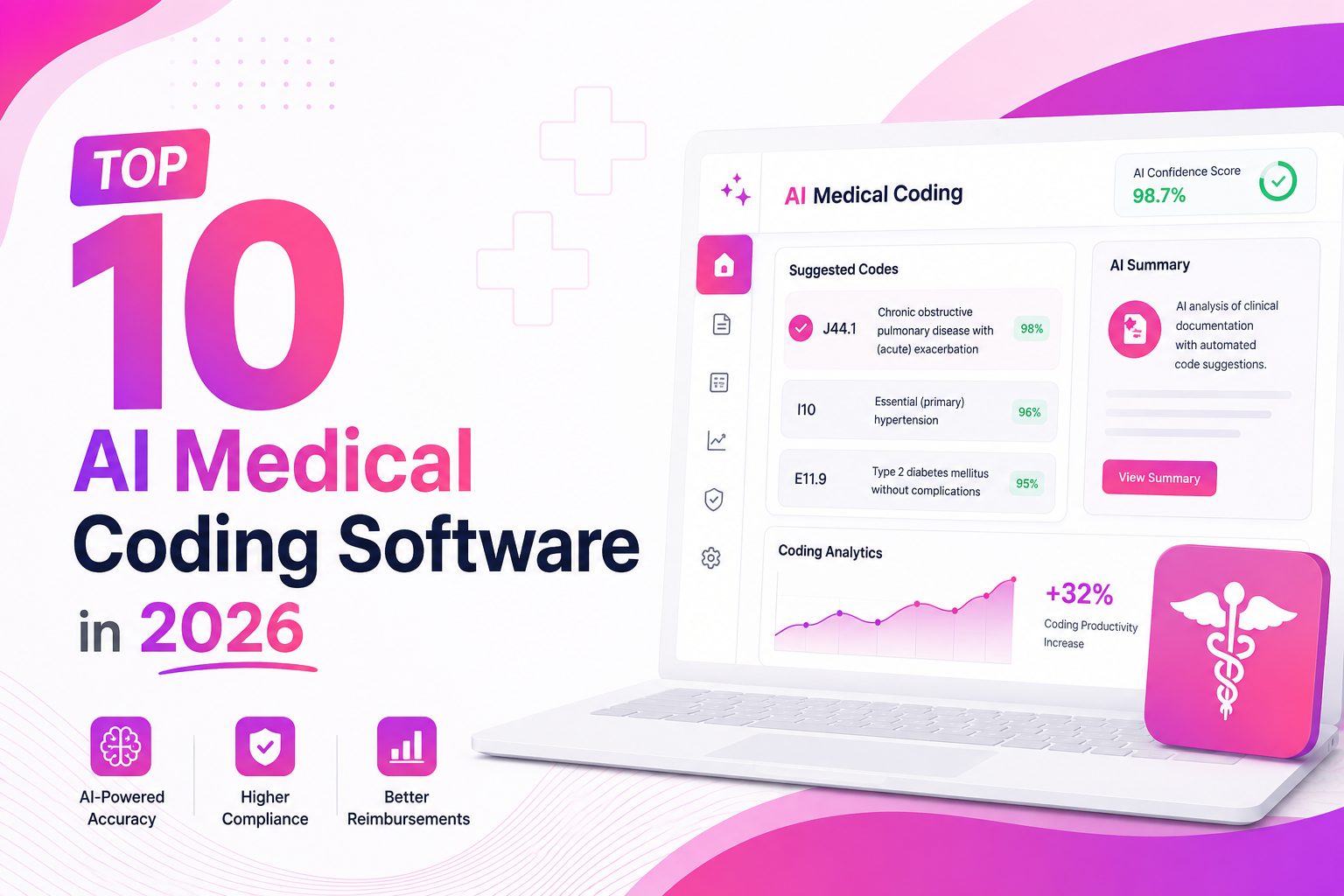
Top 10 AI Medical Coding Software in 2026
A practical comparison of AI-powered medical coding platforms transforming healthcare revenue cycle operations.
 May 8, 2026
How AI Is Eliminating Claim Denials Before They Happen
Discover how predictive AI catches denial-prone patterns before claims are submitted.
Apr 29, 2026Calculating the True ROI of RCM Automation
A practical framework for measuring how much revenue automation can recover for healthcare practices.
Want similar results for your practice?
Book a personalized demo and see how Sarva can apply this approach to your organization.