Revenue Cycle Automation Scenarios
Explore how healthcare organizations across specialties and sizes could apply AI-driven revenue cycle automation. Each scenario demonstrates a real-world application of Sarva\'s technology.
Note: These scenarios demonstrate how healthcare organizations could apply revenue-cycle automation. They are not presented as actual customer results unless explicitly labeled as "Verified Customer Case Study."
Cardiology Denial Prevention
A cardiology group experienced denial rates above 20% for procedural claims. The denials fell into three categories: NCCI bundling edits applied to cardiac catheterization and stent placement codes, medical necessity denials for stress tests and echocardiograms, and modifier 25 disputes when evaluation and management services were billed alongside procedures on the same day.
Read ScenarioOrthopedic Prior Authorization
An orthopedic group performed joint replacements, spine surgeries, and sports medicine procedures — many requiring prior authorization. PA submissions were manual, involving faxed forms and portal entries. Turnaround time for auth approvals averaged 7–10 business days, delaying surgeries. Approximately 15% of PA requests were initially denied, requiring peer-to-peer reviews that further delayed care.
Read ScenarioBehavioral Health Eligibility and Authorization
A behavioral health practice struggled with eligibility and authorization complexity. Session limits varied by payer and plan. Prior authorizations for therapy sessions required ongoing renewal. Parity compliance — ensuring mental health benefits were covered at the same level as medical benefits — added another layer of complexity. Denials for exhausted session limits and lapsed authorizations were common.
Read ScenarioASC Claim Scrubbing
An ASC billed both facility and professional components for procedures, creating complex coding and billing requirements. Denials resulted from incorrect use of ASC facility codes versus professional codes, missing implant documentation, and payer-specific ASC billing rules. The dual-component billing structure required specialized knowledge that generalist billers lacked.
Read ScenarioHealth-System Payer Denial Management
A health system with multiple facilities faced high denial volumes from diverse payer mixes. Each facility had its own billing team with different denial management processes. Network-level denial trends were invisible, and payer performance was not benchmarked across facilities. The lack of standardization led to inconsistent denial handling and missed recovery opportunities.
Read ScenarioIndependent-Practice AR Follow-Up
A solo primary care practice had aging AR exceeding $200K, with the oldest claims over 120 days. The physician handled billing personally with limited part-time help. There was no time for systematic AR follow-up — claims were submitted and payment was posted, but unpaid claims were rarely pursued. Cash flow was tight and the practice was writing off significant revenue as uncollectable.
Read ScenarioMulti-Specialty Coding Quality
A multi-specialty group with providers in cardiology, orthopedics, dermatology, and primary care had inconsistent coding quality across specialties. Each specialty had different coding patterns, modifier requirements, and payer-specific rules. Coding errors led to denials that were difficult to root-cause because the sources varied by specialty. Manual coding audits covered only 5% of encounters.
Read ScenarioMedical-Billing-Company High-Volume AR
A medical billing company serving 25+ practices was hitting a capacity ceiling. Adding new clients required hiring more billers, which eroded margins. AR follow-up was the biggest bottleneck — the team could not keep up with aging claims across all clients. Client satisfaction was declining as AR days increased. New client onboarding took 6–8 weeks.
Read ScenarioMSO Multi-Practice Revenue Visibility
An MSO managing 15 practices across different EHRs had no network-level visibility into revenue cycle performance. Each practice reported monthly using different formats and KPIs. Identifying underperforming practices took weeks of manual analysis. Best practices at high-performing practices were not systematically shared with others.
Read ScenarioPhysical-Therapy Authorization Tracking
A physical therapy practice faced denials from exhausted session limits and lapsed authorizations. PT benefits typically have visit caps (e.g., 20 visits per year) that vary by payer and plan. The practice tracked session counts manually in a spreadsheet, which was frequently inaccurate. Authorizations required renewal after a set number of visits, and lapses caused denials.
Read ScenarioDermatology Clean-Claim Improvement
A dermatology practice had a clean claim rate of 72%, with denials primarily from modifier issues — modifier 25 for same-day procedures, modifier 59 for distinct procedural services, and incorrect use of lesion removal code modifiers. Dermatology-specific bundling rules and payer-specific cosmetic vs. medical necessity determinations added complexity.
Read ScenarioOncology Prior Authorization
An oncology practice faced treatment delays due to prior authorization requirements for chemotherapy regimens, PET/CT imaging, and supportive care drugs. Each regimen required a separate PA with specific clinical documentation. Delays in authorization directly impacted patient care — chemotherapy could not begin until authorization was confirmed.
Read ScenarioPrimary-Care Eligibility
A primary care practice with high patient volume was losing revenue to eligibility-related denials. Front desk staff checked coverage once at patient intake, but coverage changes during the year were not caught. High-deductible plan patients arrived without understanding their financial responsibility, leading to uncollected co-pays and delayed payments.
Read ScenarioTelehealth Claim Workflow
A telehealth practice faced denials from telehealth-specific coding and billing complexity. Payer rules for telehealth varied — some required modifier 95, others modifier GT. Place of service codes differed for telehealth. Eligibility for telehealth benefits was not always the same as in-person. The evolving telehealth regulatory landscape made it difficult to stay current.
Read ScenarioDental Eligibility and Claim Workflow
A dental practice struggled with dental insurance eligibility and claim complexity. Dental benefits have annual maximums, different coverage percentages for different procedure categories (preventive, basic, major), and waiting periods for major services. Manual eligibility verification did not capture these details, leading to inaccurate patient estimates and denied claims.
Read ScenarioInternal RCM Denial Appeals
An in-house RCM team at a multi-specialty clinic was only appealing 30% of appealable denials due to capacity constraints. Writing appeal letters took 30–60 minutes each, and the team prioritized high-dollar claims, leaving lower-value denials unappealed. Total recoverable revenue from unappealed denials was significant.
Read ScenarioHigh-Volume Claim-Status Follow-Up
A practice processing 800+ claims per week had two staff members dedicated to checking claim status. Each spent 30+ hours per week calling payers and checking portals. The process was slow, repetitive, and prone to missed claims. Claims that were not checked fell through the cracks and aged past collection deadlines.
Read ScenarioHospital Cash-Flow Workflow
A mid-size hospital had AR days exceeding 55, with significant revenue tied up in aging claims. The revenue cycle was managed by a large team using legacy systems. Cash flow was unpredictable, and financial forecasting was difficult. The hospital needed to reduce AR days and improve cash flow visibility without adding headcount.
Read ScenarioSpecialty-Practice Payment Posting
A specialty practice received 835 ERAs from 12 different payers. A payment posting specialist spent 25+ hours per week manually posting payments, leaving little time for reconciliation or underpayment detection. Posting errors created month-end reconciliation headaches. Underpayments went unnoticed.
Read ScenarioEHR-Integrated Payer Workflow
A multi-specialty group using athenahealth wanted to add RCM automation but was concerned about workflow disruption. Staff were comfortable with the EHR billing module and resisted adopting a separate tool. Previous RCM technology implementations had failed due to low adoption.
Read ScenarioThe latest from Sarva
Practical ideas for better revenue operations, smarter automation, and stronger healthcare teams.
 May 15, 2026
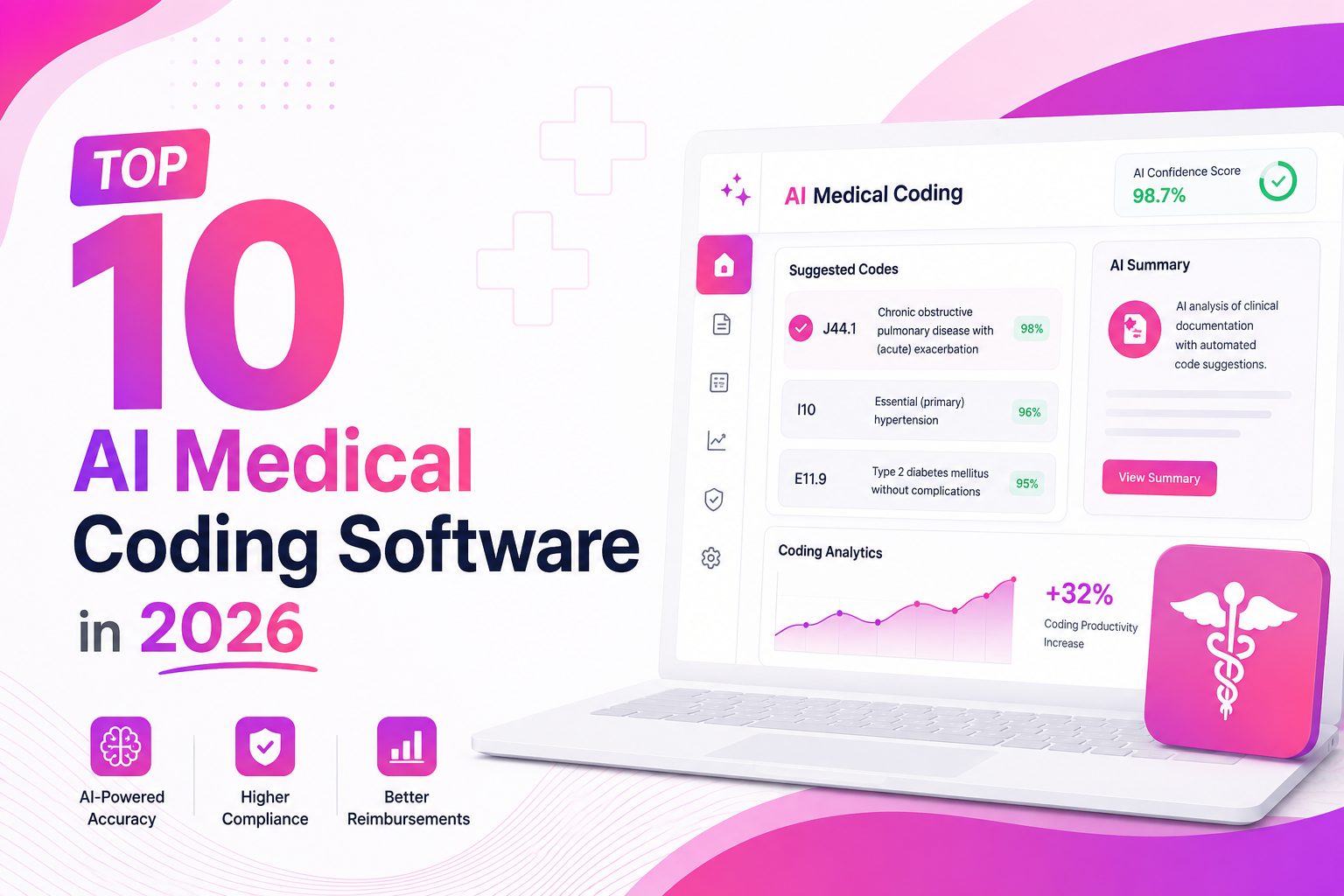
Top 10 AI Medical Coding Software in 2026
A practical comparison of AI-powered medical coding platforms transforming healthcare revenue cycle operations.
 May 8, 2026
How AI Is Eliminating Claim Denials Before They Happen
Discover how predictive AI catches denial-prone patterns before claims are submitted.
Apr 29, 2026Calculating the True ROI of RCM Automation
A practical framework for measuring how much revenue automation can recover for healthcare practices.
Want to see how this applies to your practice?
Book a personalized demo and we'll show you a tailored ROI estimate.