Automated Eligibility Verification for Healthcare Practices
Automated eligibility verification uses the EDI 270/271 transaction standard to query payer systems in real time, confirming patient coverage, co-pay amounts, deductible status, and plan details without staff manually logging into payer portals. Sarva triggers these checks automatically at appointment booking and again before the visit, surfacing structured benefits data to your front desk and billing team.
Evaluate Eligibility AutomationThe Business Problem
Front desk staff spend 15–30 minutes per patient manually logging into payer portals, navigating inconsistent interfaces, and transcribing benefits data into practice management systems. Human error during transcription leads to eligibility-related claim denials, which account for a significant portion of preventable rejections. During high-volume scheduling periods, eligibility checks are skipped entirely, creating downstream denials that surface weeks later.
Affected Team
Front desk, patient access, billing, and revenue cycle teams. The administrative burden falls heaviest on front-desk staff who must balance phone calls, patient check-in, and portal lookups simultaneously.
How It Works
Current Manual Workflow
A scheduler books an appointment. At some point before the visit, a front-desk staff member logs into the payer portal, enters patient demographics, waits for the response, screenshots or transcribes the benefits data, and manually enters it into the practice management system. If the patient has multiple plans, the process repeats. Coverage changes between booking and the visit date are rarely caught.
Automated Workflow with Sarva
When an appointment is created in the EHR or practice management system, Sarva automatically fires a 270 eligibility inquiry through its payer network connection. Within seconds, the 271 response is parsed into structured fields — co-pay, deductible, coinsurance, out-of-pocket maximum, plan effective dates, and authorization requirements. Sarva re-checks on the morning of the appointment to catch any coverage changes since booking.
Inputs
- Patient demographics (name, DOB, member ID)
- Insurance plan information
- Appointment date and time
- CPT codes for scheduled services
- Payer ID and routing information
Outputs
- Active coverage status (active/terminated)
- Co-pay amount for the visit type
- Deductible remaining and met-to-date
- Coinsurance percentage
- Out-of-pocket maximum status
- Plan effective and termination dates
- Authorization requirements flagged
Human Oversight
Sarva routes coverage terminations, expired plans, and responses with errors to staff for manual review. Staff see exceptions only — not every successful check. High-deductible patients are flagged for financial counseling so the team can proactively discuss payment options before the visit.
Security Considerations
All eligibility transactions are encrypted in transit (TLS 1.3) and at rest (AES-256). A signed HIPAA Business Associate Agreement is provided. Patient data is never used to train shared models. Sarva maintains SOC 2 Type II certification and operates on HIPAA-eligible AWS infrastructure.
Integration Considerations
Sarva connects to your existing Availity credentials or directly to payer APIs. No new payer enrollments are required. The integration works with all major EHRs and practice management systems including athenahealth, eClinicalWorks, Tebra, AdvancedMD, and ModMed. Batch eligibility for large patient panels can be scheduled during off-peak hours.
Limitations
Some smaller payers do not support real-time 270/271 transactions and require manual portal checks. Sarva identifies these payers and routes them to staff automatically. Medicaid eligibility in certain states may require direct state portal access rather than Availity routing. Response times depend on payer availability and can occasionally exceed 30 seconds during payer system outages.
Key Performance Indicators
See how this workflow applies to your practice.
Evaluate Eligibility AutomationPatient Eligibility Automation Implementation Checklist
Implementing eligibility verification automation is a step-by-step process. Use this checklist to plan your rollout:
- Map your current eligibility workflow — who checks, when, and using which tools (portal, 270/277, phone)
- Identify your top payers by claim volume and confirm each supports 270/277 EDI transactions
- Connect Sarva to your practice management or EHR system using the appropriate connector
- Define which encounter types trigger an eligibility check (new patient, scheduled appointment, pre-service)
- Configure the frequency of checks — real-time at scheduling, batch the night before, or both
- Set up exception rules for payers that do not support electronic eligibility (these route to manual review)
- Run a staff-reviewed pilot: Sarva checks eligibility and surfaces results, your team reviews before acting on them
- Measure baseline metrics before the pilot: eligibility check rate, no-coverage denial rate, and rework volume
- After the pilot, compare metrics and identify which payers or encounter types need additional rules
- Expand to additional payers and encounter types based on pilot results
This checklist is general guidance. Your implementation may vary based on your payer mix, EHR system, and practice size.
Frequently Asked Questions
Most 270/271 transactions complete in under 3 seconds. Sarva retries failed checks automatically and routes persistent errors to staff for manual review, ensuring no patient slips through without a coverage check.
The latest from Sarva
Practical ideas for better revenue operations, smarter automation, and stronger healthcare teams.
 May 15, 2026
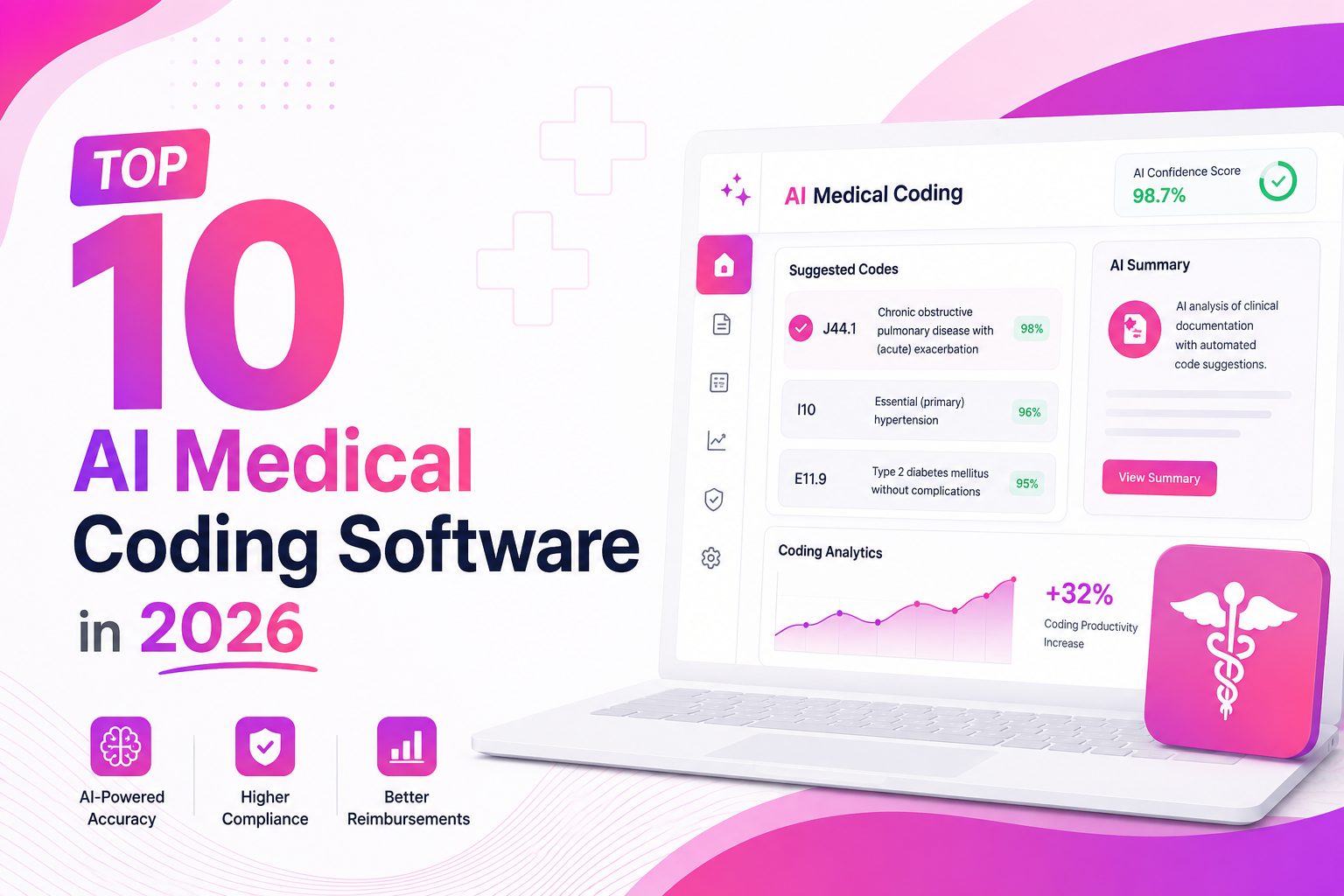
Top 10 AI Medical Coding Software in 2026
A practical comparison of AI-powered medical coding platforms transforming healthcare revenue cycle operations.
 May 8, 2026
How AI Is Eliminating Claim Denials Before They Happen
Discover how predictive AI catches denial-prone patterns before claims are submitted.
Apr 29, 2026Calculating the True ROI of RCM Automation
A practical framework for measuring how much revenue automation can recover for healthcare practices.
Ready to automate your revenue cycle?
Book a personalized demo and see how Sarva can apply this workflow to your practice.