Charge Entry Automation for Behavioral Health Practices
Behavioral health charge entry automation organizes completed encounters, checks for missing approved service details, and prepares a staff-review worklist before charges move into billing. Sarva helps behavioral health teams reduce repetitive administrative review without making clinical or coding decisions independently.
Designed for: Behavioral health practices, mental health groups, and substance-use treatment organizations with recurring charge-entry queues.
What administrative problem does this solve?
These workflows are often distributed across inboxes, portals, worklists, and spreadsheets. The practical opportunity is to make ownership and exceptions visible without removing qualified staff from decisions.
- Completed encounters wait for charge entry while staff reconcile notes, service details, and approval status.
- Missing or inconsistent service information creates rework and duplicate-charge risk.
- Front-office and billing teams lack a clear owner for unresolved encounters.
What can be automated?
- Match completed encounters to the correct patient and service date.
- Check for approved service details, required fields, and duplicate charge candidates.
- Route incomplete records to a named staff worklist with the reason for review.
- Prepare a reviewed charge file or approved handoff for the existing billing workflow.
Implementation sequence
- 01Map encounter completion and charge-entry ownership.
- 02Define required fields and duplicate-detection rules with billing staff.
- 03Start with one service line or location and a staff-approved queue.
- 04Compare baseline queue age, rework, and exception reasons before expanding.
Software and compatibility considerations
The assessment should identify the behavioral health PM/EHR, charge-entry screen or export, product version, available permissions, and approved import or interface options. Compatibility review is required; a software name alone does not establish an integration.
Human review and escalation
Staff approve the charge details and resolve clinical, coding, documentation, authorization, and patient-matching exceptions. Sarva should not independently select codes or decide whether a service is clinically billable.
Pilot measures to evaluate
Use these as evaluation criteria against a documented baseline. They are not promised outcomes.
- Completed encounters awaiting charges
- Median charge-preparation time
- Missing-detail exception rate
- Duplicate-review rate
- Staff acceptance and rework
Information needed for an assessment
- Encounter completion signal
- Patient and service-date identifiers
- Approved service detail fields
- Existing charge-entry rules
- Exception ownership
Frequently Asked Questions
It can organize information and prepare a review queue, but qualified staff remain responsible for coding, clinical interpretation, and final approval.
The latest from Sarva
Practical ideas for better revenue operations, smarter automation, and stronger healthcare teams.
 May 15, 2026
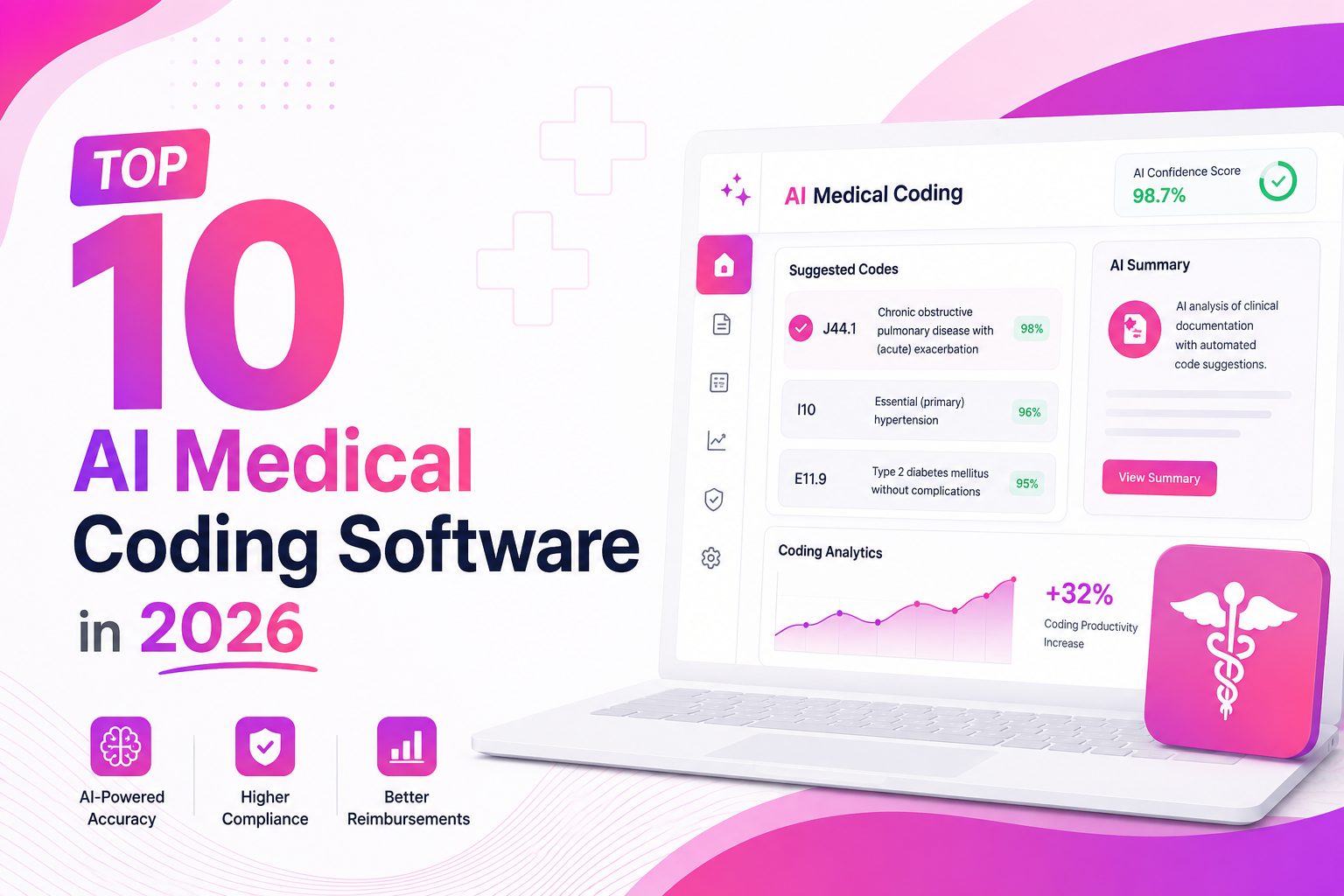
Top 10 AI Medical Coding Software in 2026
A practical comparison of AI-powered medical coding platforms transforming healthcare revenue cycle operations.
 May 8, 2026
How AI Is Eliminating Claim Denials Before They Happen
Discover how predictive AI catches denial-prone patterns before claims are submitted.
Apr 29, 2026Calculating the True ROI of RCM Automation
A practical framework for measuring how much revenue automation can recover for healthcare practices.
Review this workflow with Sarva
Bring your current process, software details, and exception rules. We will help identify what is suitable for a staff-reviewed pilot.